
Showing posts with label Jordan Hutchinson. Show all posts
Showing posts with label Jordan Hutchinson. Show all posts
Tuesday, 24 April 2012

Sunday, 15 April 2012
Critical Evaluation - Jordan Hutchinson
1) In what way does the media product use, develop or challenge forms and conventions of real media products?
In terms of continuity, we were very concerned with our film meeting the requirements and sticking to conventions. As we would be filming each scene twice from a different perspective, we wanted to make sure the shots in each were very similar, if not identical. One scene in particular was the diary scene which was used twice. We wanted the shots of each character writing in the diary to look almost identical so the audience could connect the dots and see that the female was the stalker all along.


The content and plot of our film is quite unique in the fact that it subverts stereotypes. In film, and in other aspects of the media, men are portrayed as stalker-type people who harass women with terms such as ‘peeping Tom’ being attached to this behaviour. We aimed to make our film fit the stereotype at the start of the film in order to allow the unexpected twist, even more unexpected for the audience. In addition to this, films with the same genre of our film, psychological drama, often involve twists in the plot which are original and unique – another reason we created the twist. The expectations of the content are deliberately subverted in order for the audience to enjoy the film more. We didn’t want to stick to a predictable plotline in which the audience figure out the ending before they see it, which is why we aimed to use some stereotypical conventions of films involving obsession


Unrequited Radio Trailer:
Prezi Presentation version of this question:
3) What have you learned from your audience feedback?

Research was an essential part of creating the idea for the film. To begin with, we researched the type of genre we wanted to be involved in – psychological drama – we also researched similar films to our own idea which involved stalking and obsession. We looked at films on YouTube such as ‘Single White Female’ and several short films such as ‘Stalk’ and ‘Hello Again’, both of which were very different but used several shots which we liked and thought were suitable to the genre. We relied on YouTube as our main method of research as it is the easiest way to access videos from today’s media industry and older films.
We looked on the BBFC website which allowed us to see what certificate our film is – a 12. This allowed us to see what age group our target audience would be in. The internet proved to be the best method of research due to the mass content. We used Apple Macs mostly as they were easy to access and we used them in our media class. We each owned our own technical devices such as desktop computers, laptops, phones with internet access and iPods with internet access so we were able to research at any time.

We experimented with cameras in order to get an idea of what shots we would use. We created some practice shots – many of which were used in the film. Experimenting with the camera, allowed us to develop and alter our ideas as well as come up with new ones.
The technology we used to film allowed many more techniques to be explored. For example, the HDV-1000 cameras along with the tripods enabled smooth movement for panning shots as well as a varied set of shots we incorporated into our film. HDV-1000s use SuperSteadyShot, which allowed panning shots to look smoother and had almost no technical difficulties such as a drag whilst manoeuvring and rotating the camera.

The cameras were also relatively easy to focus and we found very face very few difficulties when it came to focusing the shot, in addition to this, we toyed with the focus in order to use deep focus, where objects and people close to the camera and objects in the background are in the same focus. We also used rack focus, where the attention of the viewer is changed from one object or person to another object or person.
In relation to obstructions and difficulties with the camera, I found that there weren’t enough settings which improved the lighting quality when filming outside. As we filmed in winter, we found that the daylight hours were scarce and often unreliable. We had to alter the exposure on the camera and white balance it constantly in order to achieve a realistic looking light and environment, as the scenery – notably in the park scene – looked far too green and unrealistic. In order to overcome these obstructions , I relied on the editing stage to alter this light. I used Colour Corrector in Final Cut Express to alter the light and make it less white/bright and added blue filters to make it look darker.


In terms of my creative development, I believe these obstructions allowed me to come up with other ideas which furthered my development. For example, before, I had never used colour corrector before, so I needed to learn how to. In addition to this, there was another piece of equipment which I hadn’t used before – a zoom recorder. It was very straightforward and easy to use, though we struggled to find a suitable place to record. This part of the editing stage allowed me to consider other types of editing for future projects and enabled me to think about other parts of our film which may need altering further.


In terms of continuity, we were very concerned with our film meeting the requirements and sticking to conventions. As we would be filming each scene twice from a different perspective, we wanted to make sure the shots in each were very similar, if not identical. One scene in particular was the diary scene which was used twice. We wanted the shots of each character writing in the diary to look almost identical so the audience could connect the dots and see that the female was the stalker all along.


In addition to this, we aimed to use continuity conventions such as the 180-degree line during conversation. We also made sure during the editing stages that the shots matched up when going from one shot type to another e.g. a medium close-up to a close-up. It was important that we stuck to these continuity conventions, as we didn’t want the footage to look messy and ill fitting.


The content and plot of our film is quite unique in the fact that it subverts stereotypes. In film, and in other aspects of the media, men are portrayed as stalker-type people who harass women with terms such as ‘peeping Tom’ being attached to this behaviour. We aimed to make our film fit the stereotype at the start of the film in order to allow the unexpected twist, even more unexpected for the audience. In addition to this, films with the same genre of our film, psychological drama, often involve twists in the plot which are original and unique – another reason we created the twist. The expectations of the content are deliberately subverted in order for the audience to enjoy the film more. We didn’t want to stick to a predictable plotline in which the audience figure out the ending before they see it, which is why we aimed to use some stereotypical conventions of films involving obsession
For example, 'Fear' starring Mark Wahlberg has the Wahlberg's character portrayed as this stereotypical stalker character.

In this film, Mark Wahlberg’s character is a very menacing and dangerous person. By analysing this film, we found that certain shots such as close-ups and ones shot in the shadows portrayed this very well. We planned to use similar shots in order to depict the same about Jordan’s character, Connor.


The scene involving the female character, Lauren being watched through the bookshelves was intended to be perceived as an element of films involving stalking and obsession. This scene allows the audience to see quite clearly that the film focuses on this particular theme. In addition to this, we also used point of view shots through bushes for the same reason. Also, we used these shots in order for the audience to become convinced that the male was the stalker, causing the twist to be more shocking and unexpected.

Video/showreel version of this question:
2) How effective is the combination of your main product and the ancillary texts?
The main message and meaning of our film is to show that stereotypes can be easily subverted and that things aren't always what them seem, no matter how real they may seem at first. I believe this was reflected in our final poster as it implies a dream-like theme to the film as the image is blurred – showing that reality has become blurred. The poster is also misleading as it shows the male character as a menacing person and sticks to the ‘peeping Tom’ stereotype – something we wanted to achieve in his portrayal as a character.

The audience saw the male character as ‘menacing’ and ‘creepy’ based on the poster, without knowing the film’s plot. The poster is essential in capturing the audience and portraying a clear message as to what the film is about and/or what it involves. If the poster misleads the audience, they may be disappointed when they see the film; also, the poster may put them off the film if they believe it is about something they’re not interested in. I believe our poster would capture the target audience of the film and wouldn’t mislead them as it’s quite clear the genre of the film is a psychological one.

The poster for ‘Fear’ is quite similar to ours as it has the stereotypical male character staring menacingly into the camera. Also, on both posters, half of the faces on the characters has a shadow which implies two sides to someone’s personality: a ‘good’ and ‘bad side. In ‘Fear’, Wahlberg’s character appears as a nice person at first then it is revealed his is obsessed, similarly in our film, Connor appears to be obsessed at first and is later shown as a regular, ‘normal’ person.
Another film's poster we looked at is the poster for 'Single White Female'. We found that the lighting and shadows were very, very similar to the poster for Fear, so this allowed us to see that these type of characters needed to be portrayed in a specific way. The stalker-type character in SWF is shown looking into the camera and half of her face is hidden by the door, depicting half of her menacing personality. In addition to this, The trailer for this film revealed a lot about what the film involved without giving away the entire plot and climax and conclusion. We aimed to do something similar with our radio trailer.
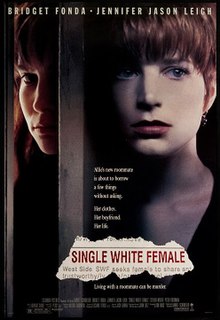
The radio trailer also provided the audience with a good idea of what the film was about and portrayed Jordan’s character even more. When the audience were asked what they thought of the film after hearing the radio trailer, most said they would go to see the film. This feedback showed us both media products were successful in selling the film to an audience.
Prezi Presentation version of this question:

Based on the feedback from the audience, I found that the film was received very well with only a few suggestions for changes and alterations. The feedback was very positive and provided a good picture of what needed altering. As the audience’s opinion is essential in creating and distributing and film, we were very pleased with the feedback.


Mind Map version:
The original brief in which the audience were asked what they thought of the film idea allowed us to see what the target audience (people interested in psychological dramas aged 12 and above) liked and disliked about the film. The parts they disliked were altered. An example of this was the window scene which involved both characters staring at each other and an edited sound clip which implied this was a dream. This scene was the transition between what the female was making up – the male as the stalker – and what was real. It was said during the questioning of the audience that this scene was quite confusing and unnecessary for understanding the plot, so we decided this scene would not be used. Another example of how the audience research had an impact on the film was when it was mentioned that the titles were too long – this was before they had short footage of the two characters together. We agreed with the audience that the titles were quite boring so we added in blurred clips of the characters together in order to show that these characters were important and that their closeness was somehow dream-like – indicated by the blurriness.
After showing the audience the practice shots, again we received quite positive feedback. Though the content of the practice shots were quite humorous, the audience questioned felt the shots used were good and suited the genre. This feedback encouraged us to use these shots.

After taking on board what the audience liked the most, we decided we would use plenty of close-ups and extreme close-ups for the 'creepy' effect the audience seemed to like. We also used several POV shots for the same effect. In terms of the audience's interpretation, it was clear there were different views on what the film tried to convey.

Many people saw what was on the surface and their interpretation came from ‘love’ and similar elements of the film whereas some looked further into to cultural and social messages within the film. It’s important for the audience to have their own interpretation of a film because if they feel the film has no message – especially with psychological films – they may feel let down as an audience and see that there was no real point to it. For a film like ours to become successful, it relies on the audience to take at least one thing away from it, whether it be an interesting story or underlying messages.
We were quite pleased with the audience's opinions on the messages within the film as we felt parts of the meaning and messages of the film came across quite clear and they were also able to fill in parts of the message with their own imagination.
We were quite pleased with the audience's opinions on the messages within the film as we felt parts of the meaning and messages of the film came across quite clear and they were also able to fill in parts of the message with their own imagination.
Mind Map version:
4) How did you use new media technologies in the construction and research, planning and evaluation stages?
Research was an essential part of creating the idea for the film. To begin with, we researched the type of genre we wanted to be involved in – psychological drama – we also researched similar films to our own idea which involved stalking and obsession. We looked at films on YouTube such as ‘Single White Female’ and several short films such as ‘Stalk’ and ‘Hello Again’, both of which were very different but used several shots which we liked and thought were suitable to the genre. We relied on YouTube as our main method of research as it is the easiest way to access videos from today’s media industry and older films.
We looked on the BBFC website which allowed us to see what certificate our film is – a 12. This allowed us to see what age group our target audience would be in. The internet proved to be the best method of research due to the mass content. We used Apple Macs mostly as they were easy to access and we used them in our media class. We each owned our own technical devices such as desktop computers, laptops, phones with internet access and iPods with internet access so we were able to research at any time.

We experimented with cameras in order to get an idea of what shots we would use. We created some practice shots – many of which were used in the film. Experimenting with the camera, allowed us to develop and alter our ideas as well as come up with new ones.
When it came to editing, we took the practice shots and tried many different editing techniques in order to compare them and see which we preferred. Using Final Cut Express, we used different transitions such as fast and slow fades. This planning technique enabled us to see what editing would be used in the final film. We also used different tones of colour when using Color Corrector. We edited the lighting effect on one particular shot by making it appear sunnier and then edited it again to make it look darker.
The evaluation stages of the project allowed us to see what worked best in the film and conversely, what didn’t. We relied on audience feedback in the early evaluation stages of planning the film to see what people thought of the film idea and what they thought needed changing.
The evaluation stages of the project allowed us to see what worked best in the film and conversely, what didn’t. We relied on audience feedback in the early evaluation stages of planning the film to see what people thought of the film idea and what they thought needed changing.
The technology we used to film allowed many more techniques to be explored. For example, the HDV-1000 cameras along with the tripods enabled smooth movement for panning shots as well as a varied set of shots we incorporated into our film. HDV-1000s use SuperSteadyShot, which allowed panning shots to look smoother and had almost no technical difficulties such as a drag whilst manoeuvring and rotating the camera.

The cameras were also relatively easy to focus and we found very face very few difficulties when it came to focusing the shot, in addition to this, we toyed with the focus in order to use deep focus, where objects and people close to the camera and objects in the background are in the same focus. We also used rack focus, where the attention of the viewer is changed from one object or person to another object or person.
In relation to obstructions and difficulties with the camera, I found that there weren’t enough settings which improved the lighting quality when filming outside. As we filmed in winter, we found that the daylight hours were scarce and often unreliable. We had to alter the exposure on the camera and white balance it constantly in order to achieve a realistic looking light and environment, as the scenery – notably in the park scene – looked far too green and unrealistic. In order to overcome these obstructions , I relied on the editing stage to alter this light. I used Colour Corrector in Final Cut Express to alter the light and make it less white/bright and added blue filters to make it look darker.


Before 

After 

In terms of my creative development, I believe these obstructions allowed me to come up with other ideas which furthered my development. For example, before, I had never used colour corrector before, so I needed to learn how to. In addition to this, there was another piece of equipment which I hadn’t used before – a zoom recorder. It was very straightforward and easy to use, though we struggled to find a suitable place to record. This part of the editing stage allowed me to consider other types of editing for future projects and enabled me to think about other parts of our film which may need altering further.
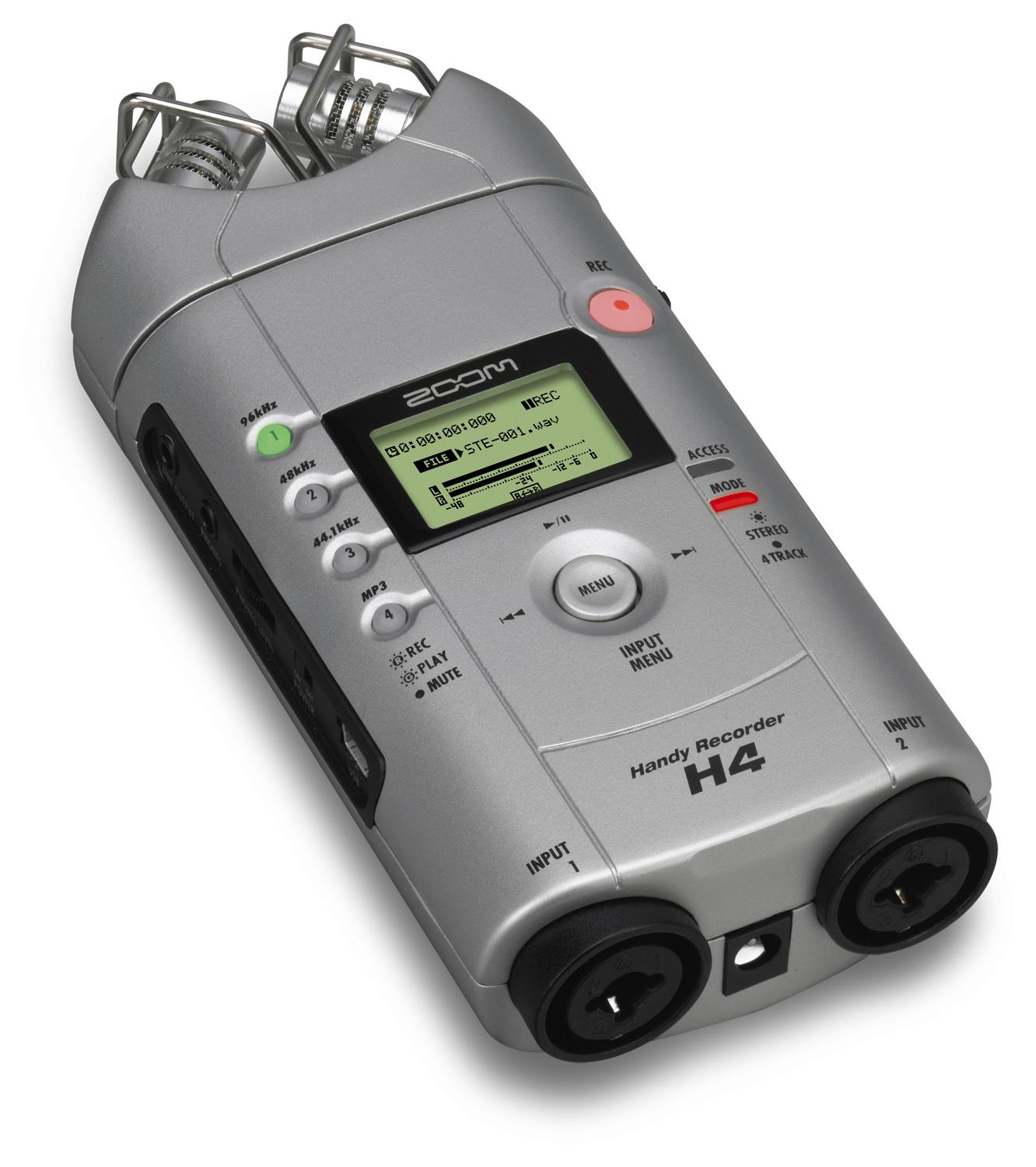

In addition to this, editing the sound encouraged me to experiment with different editing techniques such as adding echoes to the sound clips in order to see how unusual we could make them sound. After experimenting with the clips, we found that leaving them as they were, with just a few alterations on the quality and background noise, had a much better effect than editing them to sound unusual and suited the genre much better.
Monday, 2 April 2012

Thursday, 5 January 2012
Viral Advertising - Unrequited
My viral marketing idea involves the creating of a website titled laurenheigl.com in a similar format to Facebook containing a large number of photos of the female character. The site will release a new photo each day with different backgrounds from around the world which visitors to the site vote on the best one. All images of the female will show her in a candid setting where she is unaware of being photographed.

There will be banners on the site which will show appreciation for the female and make it clear that it is a fan-site dedicated to her. There will also be a choice of music for the site visitors to play which will have romantic and quite humorous songs. The aim of this viral advert is to depict a humorous, yet quite disturbing vibe for the audience and for them to questino what the film is about.

I created a site using Weebly, a free website that allows users to create their own websites. The following images represent how I made the site. The html for the site is http://laurenheigl.weebly.com/

This image shows me signing up for the site.

This image shows the naming of the website.

Creating the website domain.

Beginning the design of the site.

Changing the banner.

The almost complete site with different pages. This is the home page.

This is the photos page. It only has one image which implies that the male character has created himself.

This is the poems page. It contains three poems so far which are 'dedicated' to Lauren. They are about love.

This is the music page. It has typical love music which Connor has supposely dedicated to Lauren.

This is the comments page wgere visitors to the site can leave any messages either fore Lauren or for the site creator, Connor.

Photo of the week voting.

About Connor - doesn't really reveal any information about him - mysterious.

Examples of how visitors can leave comments.

Final
Viral Advertising - Cloverfield
In terms of films and television, viral advertising has been used both successfully and unsuccessfully. The 2008 film, Cloverfield, featuring a large monster taking over Manhattan. Unlike most viral marketing campaigns this one had virtually nothing to with the films plot or characters, instead it focused mainly on the fictional drink Slusho! and the fictional company Tagruato. On July 9, 2007, producer J. J. Abrams stated that, while a number of websites were being developed to market the film, the only official site that had been found was 1-18-08.comAt the site, a collection of time-coded photos are shown to visitors to the site to piece together a series of events and interpret their meanings. Also, while on 1-18-08.com, if the page is left open long enough, the monster's roar can be heard. Eventually, www.cloverfieldmovie.com was created. The site provided both a trailer and a number, 33287, which, when texted from a mobile phone, provided a ringtone of the monster's roar and a wallpaper of a decimated Manhattan.


The drink Slusho! served as part of the viral marketing campaign. Viral websites for Slusho! and a Japanese drilling company named Tagruato were launched to add to the mythology of Cloverfield. When Cloverfield was hosted at Comic-Con 2007, gray Slusho! T-shirts were distributed to attendees. Fans who had registered at the Slusho! website for Cloverfield received e-mails of fictional sonar images before the film's release that showed a deep-sea creature heading toward Manhattan.
The viral marketing campaign created a large amount of hype before the title of the film was even released. It was a large success in terms of generating an audience.
Wednesday, 4 January 2012
Viral Advertising
Viral advertising is a type of advertising generally delivered by 'word of mouth' which is free to use as a method of advertising something. Often in the form of video clips, viral advertising can be used to advertise a wide range of products, companies and films. In order to make viral marketing/advertising work, there is three sets of criteria which must be met.
- Message: Only messages that are both memorable and sufficiently interesting to be passed on to others have the potential to spur a viral marketing phenomenon. Making a message more memorable and interesting or simply more infectious, is often not a matter of major changes but minor adjustments.
- Environment: The environment is crucial in the rise of successful viral marketing – small changes in the environment lead to huge results, and people are much more sensitive to environment. The timing and context of the campaign launch must be right. - Derived from Wikipedia (source: Andreas Kaplan and Michael Haenlein. http://www.escpeurope.eu/nc/faculte-recherche/corps-professoral-escp-europe/professor/name/kaplan/-/research/
Kaplan Andreas M., Haenlein Michael, (2010), Users of the world, unite! The challenges and opportunities of social media, Business Horizons, Vol. 53, Issue 1, p. 59-68
View more documents from studente1000
The videos feature Blendtec founder, Tom Dickson, destroying a variety of expensive or unusual products, most notably the iPad and the iPad 2 as well as a tiki torch, a golf club and even glow sticks. The adverts have been incredibly successful on YouTube achieving over 1 million views per episode. A comedic element is used within the advertisements as with many viral ads. This type of viral marketing is advertising the company, Blendtec and its products. Viral advertising can be used for a variety of different things.
This piece of viral advertising is used to advertise the Blendtec blenders. The company have many advertisements, captioned 'Will It Blend?', posted on YouTube which show their blenders as the 'world's best blenders'. The clips feature several products - not typically placed into a blender - being ground down to almost dust. This particular clip involves the blending of the iPad.
The videos feature Blendtec founder, Tom Dickson, destroying a variety of expensive or unusual products, most notably the iPad and the iPad 2 as well as a tiki torch, a golf club and even glow sticks. The adverts have been incredibly successful on YouTube achieving over 1 million views per episode. A comedic element is used within the advertisements as with many viral ads. This type of viral marketing is advertising the company, Blendtec and its products. Viral advertising can be used for a variety of different things.
Tuesday, 3 January 2012
Music Research (Unfinished)
As I may be composing the music used for the film, I thought I'd put up some information about what kind of music I will be creating. I've researched some music from different films with similar genres to our's. Though psychological thrillers and dramas usually have quite chilling or eery music, often played on a piano, American Pyscho uses a very different style of music.
(Yet to embed)
------------------
----- more research---------
Though I like this use of music in the film, I think it wouldn't suit our film at all as there is no comedy element in Unrequited. Instead, we've decided it would be much more effective to use a traditional pyschological-style of music.
(Yet to embed)
------------------
----- more research---------
Though I like this use of music in the film, I think it wouldn't suit our film at all as there is no comedy element in Unrequited. Instead, we've decided it would be much more effective to use a traditional pyschological-style of music.
Tuesday, 20 December 2011
Audience Feedback
After telling several people the idea of our film and showing them the script, we asked them a series of questions:
Saturday, 17 December 2011
Audience Research - Survey 2

What is your favourite genre of film?
"Horror, especially gory ones."
What do you like about that genre?
"The good ones get you on the edge of your sit. They can be exciting and make you laugh a bit too."
What is your favourite film?
"I like The Grudge and its sequels. I like the Saw films as well."
What genres do you dislike?
"Probably Romantic ones like 'One Day' or something like that. They're really boring and pathetic."
-After telling them the film idea-
What are your opinions on our film idea?
"It sounds interesting. After watching it, I think I'd admire the unexpected twist."
What do you like about our film idea?
"It sounds like it would keep your attention the whole time you're watching it. Instead of it having parts which are boring."
What do you think we could change about our film idea?
"Maybe come up with some music ideas. The film itself sounds good."

What genre do you think our film will be?
"I'm not sure. A Thriller maybe?"
What certificate do you think our film will be?
"15 or something a bit lower. "

Where do you think our film will be shown?
"I think it's good enough to be made into a longer film so it could get into cinema. Or at a festival."
Are there any films you think are similar to ours?
"There's one with Christian 'Somebody' (Bale) where you find out the story as it goes on. I can't think what it's called. (The Machinist). It's good anyway. It's not similar but it has a similar element in it.

Where do you usually watch films?
"Either on TV or DVD."
Who do you watch films with?
"Usually with my Husband."
Friday, 16 December 2011
Audience Research - Survey 1
I asked my Dad, George Hutchinson, aged 51 - a regular film-watcher - a series of questions:

Where do you usually watch films?
"On TV or DVD"
Who do you watch films with?
"Whoever's in the room with me, usually my wife."
What is your favourite genre of film?
"Westerns."

What do you like about that genre?
"I like old-style films and it interests me how they were made. They're not made like that anymore."
What is your favourite film?
"Anything with Clint Eastwood. Probably 'Fistful of Dollars'.

What genres do you dislike?
"I'm not too keen on Thrillers"
-After telling them the film idea-
What are your opinions on our film idea?
"I'd give it a watch if it was on TV. The idea is quite unique and it would be interesting watching it for the first time without knowing the story or the twist."
What do you like about our film idea?
"It sounds quite unique. I've seen a lot of films but none that I've seen have a twist like yours."

What do you think we could change about our film idea?
"I don't know really. It's your film so I think you should make it how you think it will look best."
What genre do you think our film will be?
"Probably a psychological one. It's one that'll make you think about the story and you'll be figuring it out as it goes on."
What certificate do you think our film will be?
"A 12A or something like that."
Where do you think our film will be shown?
"It seems like one of those internet ones you get in emails. I don't think a short film would make money so it'll be free to watch."
Are there any films you think are similar to ours?
"None that I can think of."

Where do you usually watch films?
"On TV or DVD"
Who do you watch films with?
"Whoever's in the room with me, usually my wife."
What is your favourite genre of film?
"Westerns."
What do you like about that genre?
"I like old-style films and it interests me how they were made. They're not made like that anymore."
What is your favourite film?
"Anything with Clint Eastwood. Probably 'Fistful of Dollars'.
What genres do you dislike?
"I'm not too keen on Thrillers"
-After telling them the film idea-
What are your opinions on our film idea?
"I'd give it a watch if it was on TV. The idea is quite unique and it would be interesting watching it for the first time without knowing the story or the twist."
What do you like about our film idea?
"It sounds quite unique. I've seen a lot of films but none that I've seen have a twist like yours."

What do you think we could change about our film idea?
"I don't know really. It's your film so I think you should make it how you think it will look best."
What genre do you think our film will be?
"Probably a psychological one. It's one that'll make you think about the story and you'll be figuring it out as it goes on."
What certificate do you think our film will be?
"A 12A or something like that."
Where do you think our film will be shown?
"It seems like one of those internet ones you get in emails. I don't think a short film would make money so it'll be free to watch."
Are there any films you think are similar to ours?
"None that I can think of."
Subscribe to:
Posts (Atom)